

Best Silver Bars for Beginners : What to Look for Before Buying
- account_circle TRS
- calendar_month Kamis, 10 Sep 2026
- visibility 29
- comment 0 komentar
- print Cetak

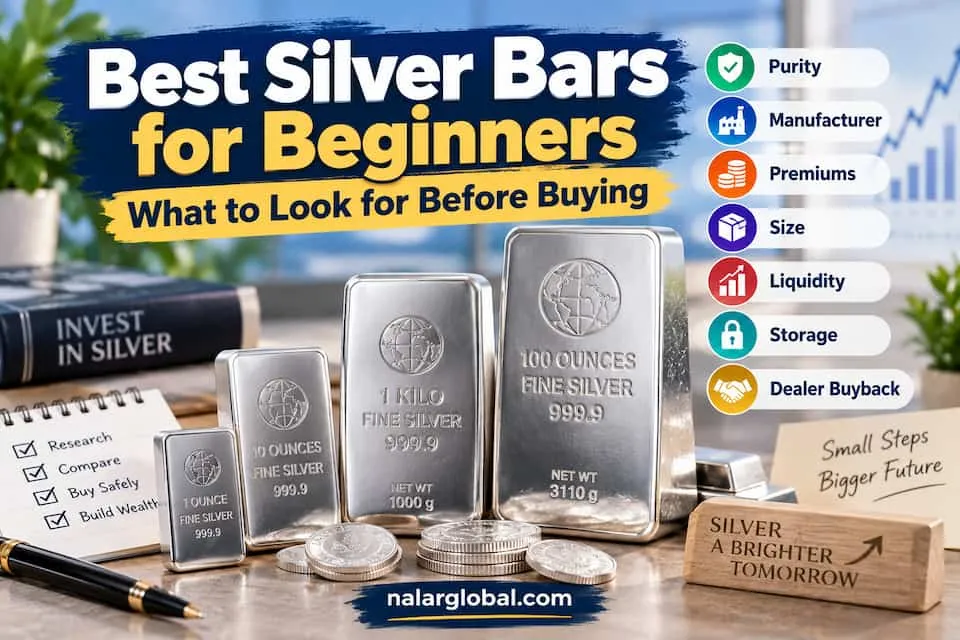
Best Silver Bars for Beginners
info Atur ukuran teks artikel ini untuk mendapatkan pengalaman membaca terbaik.
Best Silver Bars for Beginners: What to Look for Before Buying
Buying your first silver bar can feel surprisingly complicated.
At first glance, the process seems simple: find a silver bar, check the price, pay the dealer, and store the metal.
But experienced bullion buyers know that the purchase price is only one part of the decision.
The best silver bars for beginners should be easy to understand, reasonably priced, recognizable, authentic, and practical to resell.
Beginners should also understand the difference between the silver spot price and the actual price paid for physical bullion.
A silver bar can contain the correct amount of silver and still be an expensive purchase if its premium is unusually high.
This guide explains the most important factors to consider before buying silver bars.
What Is a Silver Bullion Bar?
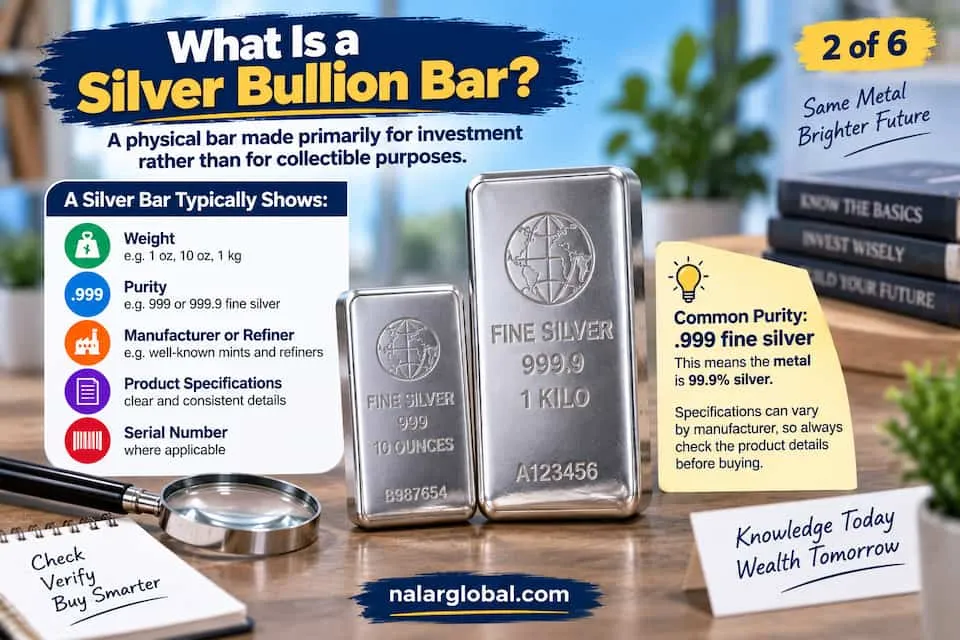
A silver bullion bar is a physical bar made primarily for investment rather than for collectible purposes.
Investment-grade silver bars commonly identify their:
- Weight
- Purity
- Manufacturer or refiner
- Product specifications
- Serial number or identification details, where applicable
One of the most common purity specifications is .999 fine silver, meaning the metal is 99.9% silver.
The exact specifications vary by manufacturer and product.
Before buying, always check the product details rather than assuming that every silver bar is identical.
What Makes a Silver Bar Good for Beginners?
There is no single silver bar that is objectively best for every investor.
Instead, beginners should look for a combination of characteristics.
A practical silver bar should ideally have:
✓ Recognized purity
The silver content should be clearly stated.
✓ Reputable manufacturing
The manufacturer or refiner should be established and recognizable.
✓ Reasonable premium
The purchase price should be reasonable compared with the underlying silver value.
✓ Practical size
The bar should fit your budget and storage arrangements.
✓ Resale potential
Dealers should be willing to buy the product back.
✓ Easy authentication
Clear markings and recognized specifications can make verification easier.
These factors are generally more important than attractive packaging or elaborate designs.
1. Check the Silver Purity
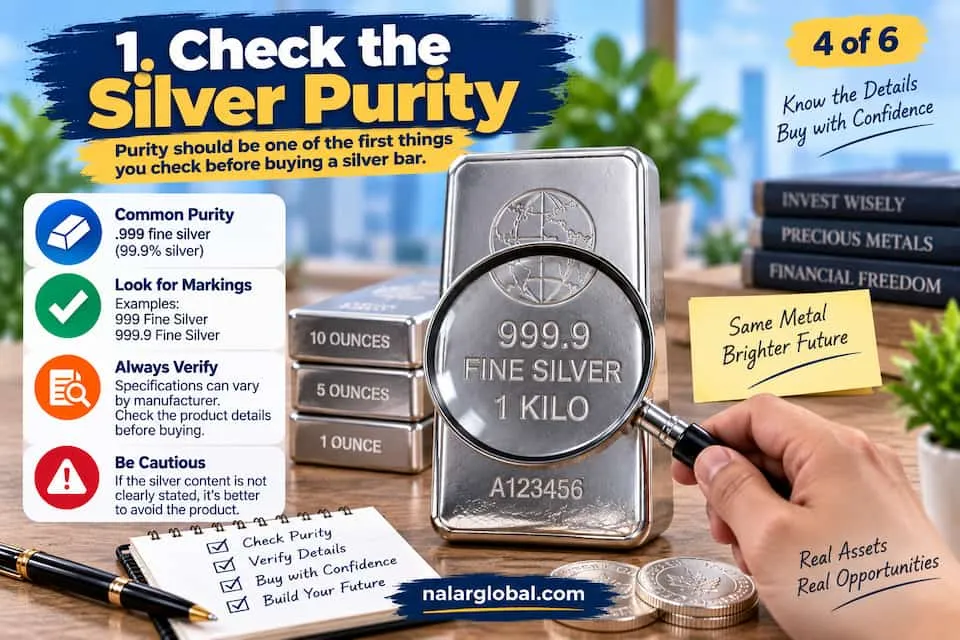
Purity should be one of the first things you check.
Investment silver is commonly sold as .999 fine silver.
The notation means the bar contains 999 parts of silver per 1,000 parts of metal.
Some products may have different purity specifications, so always verify the manufacturer’s stated specifications.
Look for markings such as:
999 Fine Silver
999.9 Fine Silver
or another clearly stated purity.
If the product does not clearly identify its silver content, beginners should be cautious.
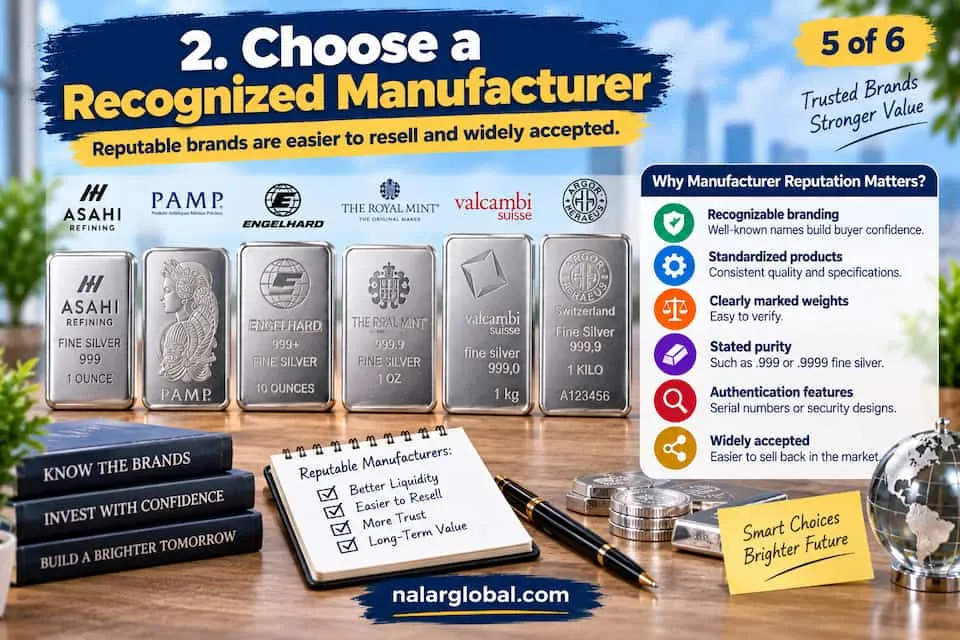
2. Choose a Recognized Manufacturer
Manufacturer reputation matters because it can influence buyer confidence and resale.
Established refiners and mints typically have:
- Recognizable branding
- Standardized products
- Clearly marked weights
- Stated purity
- Authentication features
- Established distribution networks
Examples of well-known precious-metals producers include major refiners and sovereign mints.
However, the most famous brand is not necessarily the best choice.
The key is whether the product is widely recognized and readily accepted in the market.
3. Choose the Right Silver Bar Size
Silver bars are available in many sizes.
Common options include:
- 1 oz
- 5 oz
- 10 oz
- 1 kilogram
- 100 oz
Larger bars may also be available.
Each size has advantages and disadvantages.
1-ounce bars
These offer maximum flexibility.
They are relatively easy to understand and can be purchased in small increments.
However, the premium per ounce can be relatively high.
5-ounce and 10-ounce bars
These can provide a useful middle ground.
They offer more silver per purchase while remaining considerably easier to handle than very large bars.
1-kilogram bars
These represent a substantial amount of silver.
They may be more efficient for investors who already have experience with physical bullion.
However, they require greater upfront capital and storage capacity.
100-ounce bars
These are generally more appropriate for larger investors.
They require substantial capital and can be less flexible when selling.
For many beginners, smaller or medium-sized bars may offer the best balance between affordability, premiums, and liquidity.
4. Compare the Premium Over Spot
This is one of the most important concepts for a new silver investor.
The spot price represents the current market price of silver.
But physical silver normally sells above spot.
The difference is the premium.
For example, suppose silver trades at $60 per ounce.
A dealer might sell a physical one-ounce bar for $65.
The $5 difference represents the premium and associated costs.
Premiums can vary depending on:
- Bar size
- Manufacturer
- Dealer
- Market conditions
- Availability
- Demand
- Fabrication costs
Don’t automatically choose the product with the lowest advertised premium.
Instead, compare the total delivered price per ounce.
5. Check the Dealer’s Buyback Policy
A common beginner mistake is focusing entirely on buying.
But investing in physical silver involves two transactions:
Buying
and eventually
Selling
Before purchasing, ask the dealer:
Do you buy this silver bar back?
Then ask:
What determines your buyback price?
Also ask whether the dealer buys bars from other manufacturers.
A clear buyback policy can provide valuable information about the product’s liquidity.
6. Understand the Buy-Sell Spread
The difference between what you pay and what you can receive when selling is important.
Imagine:
Purchase price: $700
Potential dealer buyback: $640
Your initial spread is $60.
Silver’s market price needs to rise enough to overcome that difference before the investment becomes profitable, assuming no other costs.
This is why comparing dealers is so important.
The cheapest purchase price is not always the cheapest overall transaction.
7. Consider the Manufacturer’s Reputation
When comparing silver bars, consider whether the manufacturer is:
- Established
- Recognized internationally
- Accepted by major dealers
- Clearly identified
- Producing standardized bullion
For beginners, recognizable products can reduce uncertainty when it is time to sell.
A buyer who knows the manufacturer and specifications may require less verification.
8. Pay Attention to Authentication
Counterfeit precious metals are a genuine concern.
For this reason, beginners should purchase from reputable dealers and understand the authentication features of the product.
Depending on the manufacturer, these may include:
- Serial numbers
- Assay cards
- Security features
- Microtext
- Holographic elements
- Manufacturer-specific verification systems
Not every silver bar uses the same authentication technology.
Never assume that packaging alone proves authenticity.
For expensive purchases, consider professional verification when appropriate.
9. Avoid Buying Silver Solely for Appearance
Some silver bars are beautifully designed.
Limited editions and artistic products can command substantial premiums.
These products may appeal to collectors.
But if your primary objective is silver bullion accumulation, paying a large premium for decorative features may not be efficient.
A beginner should first determine whether they are buying:
Bullion
or
Collectible silver.
They can have very different pricing structures.
10. Consider Storage Before You Buy
Silver is relatively inexpensive per ounce compared with gold.
That is an advantage for accessibility.
But it creates a storage problem.
As your silver holdings grow, the metal becomes increasingly heavy and bulky.
Consider:
- Home storage
- Safe or vault
- Insurance
- Security
- Transportation
- Accessibility
If you accumulate substantial quantities, professional storage may become worth considering.
Storage costs should be included in your overall investment calculation.
Best Silver Bar Sizes for Beginners
There is no universally correct size.
But a simple framework can help.
| Bar Size | Best For | Main Advantage | Main Drawback |
|---|---|---|---|
| 1 oz | First-time buyers | Maximum flexibility | Higher premium |
| 5 oz | Small investors | Balance of size and flexibility | Less common than 1 oz/10 oz |
| 10 oz | Regular investors | Good balance | Higher upfront cost |
| 1 kg | Larger investors | More efficient bulk purchase | Heavy and less flexible |
| 100 oz | Experienced/larger investors | Potentially lower premium | Large capital requirement |
For many beginners, 1 oz to 10 oz bars are worth comparing first.
The best choice depends on the premium, budget, and local resale market.
Should Beginners Buy 1-Ounce or 10-Ounce Silver Bars?
This is a common question.
Choose 1-ounce bars if:
- You are making your first purchase
- You want maximum flexibility
- You want to sell small amounts later
- You have a limited initial budget
Consider 10-ounce bars if:
- You already understand the bullion market
- You want a larger purchase
- The premium is meaningfully lower
- You have appropriate storage
- You don’t expect to sell small portions frequently
There is no universal winner.
The right size depends on your circumstances.
Silver Bars vs Silver Coins
Beginners may also wonder whether bars or coins are better.
Both can provide exposure to physical silver.
Silver bars
Advantages:
- Often available in a wide range of sizes
- Can be efficient for accumulating larger quantities
- Simple bullion format
Disadvantages:
- Some sizes may be less flexible to sell
- Authentication remains important
- Larger bars require more capital
Silver coins
Advantages:
- Widely recognizable in many markets
- Often easy to sell individually
- Some have strong retail demand
Disadvantages:
- Premiums can be higher
- Some coins carry collectible premiums
- Design and minting costs can increase the price
The best choice depends on your objectives and local market.
Where Should You Buy Silver Bars?
The dealer you choose can be as important as the product.
Look for a seller with:
- Established business history
- Clear pricing
- Transparent product specifications
- Secure payment options
- Shipping and insurance information
- Clear return policy
- Published or explainable buyback terms
- Strong reputation
Be particularly careful with offers that appear dramatically cheaper than the market.
If a deal seems too good to be true, investigate before sending money.
A Beginner’s Silver-Buying Checklist
Before clicking Buy, ask:
Product
☐ Is the silver purity clearly stated?
☐ Is the weight correct?
☐ Is the manufacturer reputable?
☐ Does the product have recognizable markings?
Price
☐ What is the current silver spot price?
☐ What premium am I paying?
☐ What is my total cost per ounce after shipping and fees?
Liquidity
☐ Will dealers buy this product?
☐ What is the expected buyback price?
☐ How large is the buy-sell spread?
Practical considerations
☐ Where will I store the silver?
☐ Is it insured?
☐ Can I safely transport it?
☐ Can I afford the purchase without compromising emergency savings?
If you cannot answer these questions, it may be better to research further before buying.
What Silver Bars Should Beginners Avoid?
Beginners should be cautious about:
Extremely high premiums
A beautiful design does not automatically make an investment product better.
Unknown manufacturers
Products with little market recognition may be harder to resell.
Unverified sellers
The dealer’s reputation matters.
Excessively large bars
Large bars may be inefficient if you have limited capital or storage.
Impulse purchases
Silver can experience significant price volatility.
Don’t buy simply because the price has recently risen.
Is Silver a Good Investment for Beginners?
Silver can be useful as part of a diversified investment strategy.
But it is not risk-free.
Silver prices can experience significant volatility.
The metal also has substantial industrial demand, which means its price can be influenced by global economic activity, technological trends, manufacturing, and investor demand.
The Silver Institute’s World Silver Survey 2026 highlights the continuing importance of industrial demand while also documenting technological changes that affect silver consumption. (silverinstitute.org)
Investors should therefore avoid viewing silver simply as a guaranteed hedge against inflation.
Gold vs Silver for Beginners
If you are deciding between gold and silver, consider what matters most.
Gold
Better suited to investors who prioritize:
- Wealth density
- Storage efficiency
- Lower volatility
- Monetary characteristics
- Deep liquidity
Silver
Better suited to investors who prioritize:
- Lower purchase price
- Gradual accumulation
- Industrial exposure
- Higher potential volatility
- Larger physical holdings
For a deeper comparison, read:
[Gold vs Silver: Which Precious Metal Is Better for Investors?]
Final Verdict: What Are the Best Silver Bars for Beginners?
The best silver bars for beginners are not necessarily the cheapest or most attractive.
A good beginner bullion product should combine:
High purity + reputable manufacturer + reasonable premium + practical size + good resale potential.
For many new investors, smaller or medium-sized bars can provide a useful balance between flexibility and cost.
Before purchasing, compare the total price, premium, manufacturer, dealer reputation, buyback policy, and storage requirements.
Most importantly, think about the entire investment cycle.
You are not only asking:
“How much does this silver bar cost?”
You should also ask:
“How much silver am I actually getting, how much am I paying above spot, and how easily can I sell it later?”
Those questions can help turn a simple bullion purchase into a more informed investment decision.
Meta Description:
Looking for the best silver bars for beginners? Learn how to compare purity, size, premiums, manufacturers, authenticity, liquidity, storage, and dealer buyback policies.
Disclaimer: This article is for informational and educational purposes only and does not constitute financial, investment, tax, or legal advice. Precious metals are volatile investments and can lose value. Always conduct your own research before making an investment or purchase decision.


- Penulis: TRS
- Editor: TRS
- Sumber: https://www.youtube.com/watch?v=v34hmMPARe0












Saat ini belum ada komentar